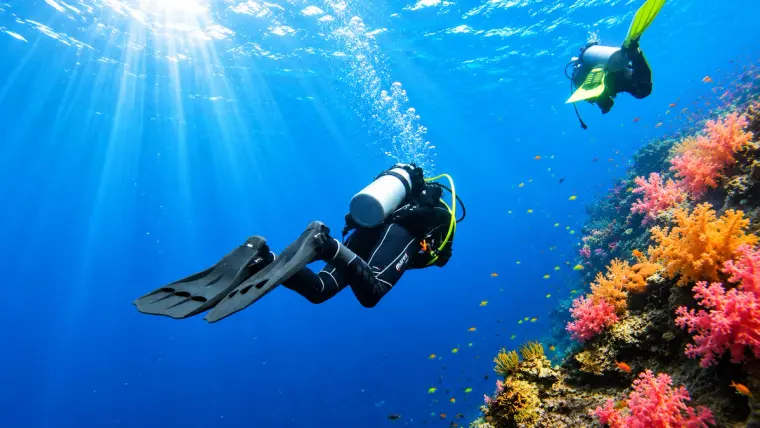
Discover Diving vs. Open Water: The Full Comparison
Discover diving and the Open Water licence compared on process, requirements and cost, with scenario-based picks and three common myths.
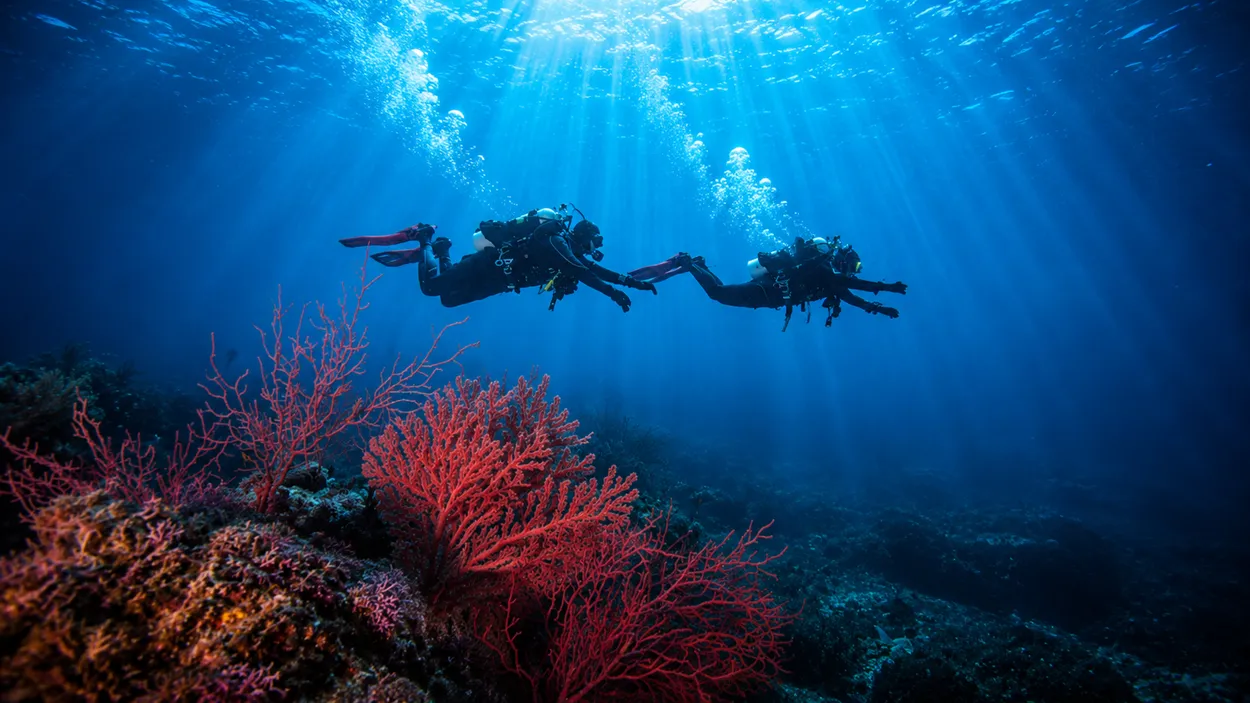
The short answer: if you want to spend half a day finding out whether the sea suits you, take a discover dive; if you already know you'll keep diving, go straight for the Open Water certification. A discover dive is a half-day guided ocean experience with no certification required; Open Water is a 3–4 day course ending in a lifetime-valid international certification, issued by private training agencies, to dive independently worldwide. As an instructor who teaches both, here is the complete decision framework.
Side by side
| Discover dive | Open Water certification | |
|---|---|---|
| Time | Half a day | 3–4 days (theory + 2 pool + 4 ocean sessions) |
| Requirements | None, non-swimmers welcome | None, no prior experience needed |
| Minimum age | Usually 10+ | Usually 10+ (junior standard) |
| Max depth | Shallow, instructor alongside | 18m by certification standard |
| You walk away with | The memory and the photos | A lifetime international certification |
| Diving on your own | No, always instructor-led | Yes, independently with a buddy |
| Cost logic | ₩100,000, ~1/10 of the course | ₩1,000,000, lodging, meals, gear & boat included |
How a discover dive works
Discover Scuba Diving is the "no license, just today, let's get you in the ocean" program:
- Land briefing (10–20 min): regulator use, equalizing, basic hand signals
- Shallow-water adaptation: until breathing underwater feels natural, no rushing
- Into the sea with your instructor: 20–30 minutes over Beomseom's soft coral grounds, one-on-one
Know the limits, too: discover dives never accumulate into a qualification, an instructor must always be beside you, and depth stays restricted. It's optimized for "today's experience", not the path to becoming a diver.
How Open Water works
The Open Water Diver is the world's entry certification, proving you can dive independently with a buddy to 18m.
- Theory: textbook or eLearning, finish it online beforehand and your on-site schedule shortens
- 2 confined-water (pool) sessions: core skills like mask clearing and regulator recovery, practiced somewhere safe
- 4 ocean training dives: the same skills in the real sea, ours happen at Beomseom, which means your training ground is one of Korea's best dive sites
- Validity: lifetime, though a refresher is recommended after a long break
Certifying agencies (PADI, SSI, RAID, etc.) mutually recognize each other, so the instructor matters more than the logo. Our courses are taught by a RAID Master Instructor / SSI Advanced Instructor.
The cost logic
Exact prices vary by season and package, see our courses but the structure is simple: a discover dive is ₩100,000 and the Open Water course is ₩1,000,000, about ten times more. The course fee is all-inclusive, though: accommodation during training (6-bed dormitory, or a double room when available), breakfast and lunch (dinner not included), gear rental, pool fees, certification issuance, and boat dives are all covered. If you plan to keep diving, the course is the better value.
“A million won sounds like a lot, but it covers lodging during the course, breakfast and lunch, gear, pool fees, and the boat dives. Do the math item by item and the answer is clear.” Bae Kyung-jo, RAID Master Instructor · SSI Advanced Instructor
Which one fits you, by scenario
- "I can spare one day of my Jeju trip" → discover dive. Half a day in Beomseom's sea, and your afternoon plans survive
- "I'm scared of water but curious" → discover dive, one-on-one. You don't need to swim
- "I want diving in my life" → straight to Open Water. Skipping the discover dive is perfectly fine
- "Palau or the Maldives is the dream" → Open Water plus logged dives. With a license, you focus on the diving once you're there
Age and health requirements, check these for family trips
Both programs generally start at age 10 (ages 10–14 fall under junior standards with more conservative depth limits). Plenty of families do a discover dive together, and whichever member falls in love with the water continues to certification.
Health requirements are identical for both: a medical questionnaire at booking, where heart or respiratory conditions, ear/sinus surgery history, or pregnancy may restrict participation or require a physician's clearance. And remember, a blocked nose from a same-day cold makes equalizing difficult enough to spoil a dive. When in doubt, ask before you book.
After Open Water, the diver's roadmap
Open Water is a beginning, not an end. Knowing the next steps makes the picture clearer:
- Log dives: right after certification, Beomseom fun dives are the classic way to build experience, familiar water, new points every visit
- Advanced (AOW): down to 30m, with deep and navigation specialties, many divers take it straight after Open Water
- Overseas trips: to dream seas like the world's top 7. To spend those trips diving rather than re-learning, we recommend 10+ logged dives at home first
Three common myths
- "A discover dive first is wasted money" No. Many divers continue into certification, and existing water comfort makes the course easier
- "Enough discover dives add up to a license" They don't. No number of discover dives leaves a qualification. The moment you consider a second one is the moment to switch tracks
- "Open Water is a hard exam" It's not pass/fail testing; it's skill acquisition, practiced together until it works. The theory quizzes simply confirm the material
Continuing from discover to certified
A discover dive shortens the adaptation phase of the course. Short on vacation days? Finish the theory online before you arrive then your time here is all pool and ocean. There is no wrong order. The right answer is getting in the water.
FAQ
What's the biggest difference between a discover dive and Open Water?
A discover dive is a half-day guided experience with an instructor one-on-one and no certification required. Open Water is a 3–4 day course ending in a lifetime international certification to dive independently with a buddy to 18m.
Do I need to be a good swimmer for Open Water?
No, the Open Water course has no swim assessment. Swim tests are only required of people training to become instructors. If you're nervous in water, a discover dive first is a great way to build comfort.
Can multiple discover dives add up to a certification?
No, discover dives never accumulate into a qualification. If you plan to continue, start the Open Water course: its ₩1,000,000 fee includes accommodation during training, breakfast and lunch (dinner not included), gear rental, pool fees, certification issuance, and boat dives.
How long does Open Water take, and how long is it valid?
Usually 3–4 days (theory, two pool sessions, four ocean dives at Beomseom), shorter if you finish theory online in advance. The license is valid for life; a refresher is recommended after a long break.
Which agency is best, PADI, SSI, or RAID?
Major agencies' Open Water certifications are mutually recognized, so the instructor's skill matters more than the logo. Nautilus Dive courses are taught by a RAID Master Instructor / SSI Advanced Instructor.
About the author
Related Posts