Jeju's Harbor Diving Ban: Where to Dive Safely in 2026
Korea bans swimming and diving at ports from April 2027. What the viral Jeju harbor diving craze means for travelers, and where to dive legally instead.
No, Jeju is not banning scuba diving. Korea's revised harbor law, passed in March 2026, bans swimming, jumping, and snorkeling at fishing ports and harbors from April 2027, with fines of up to 500,000 won. Licensed boat diving at protected sites like Beomseom and Munseom continues exactly as before. But the headlines have set off a very real "last summer" rush at Jeju's viral harbors this July, and plenty of confusion for travelers who came to get in the water. Here is what the law actually says, why it exists, and how to dive Jeju the safe, legal way, written by a dive team that works these waters every day.
What the new law actually says
In March 2026, Korea's National Assembly passed a revision to the Fishing Villages and Fishery Harbors Act. Once it takes effect in April 2027, swimming, diving, snorkeling, and other recreational water activities, along with cooking and camping, will be prohibited at fishing ports nationwide, whether or not boats are actively using the facilities. Violations carry fines of up to 500,000 won.
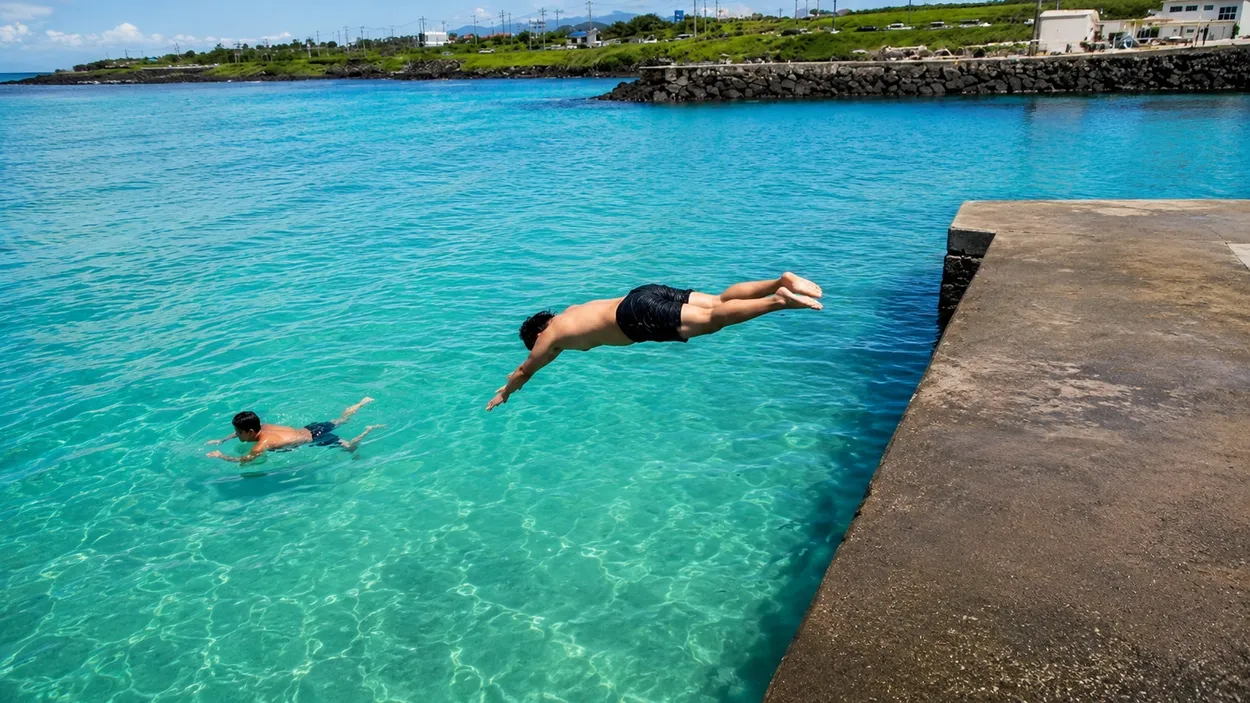
One word in that sentence causes most of the confusion: "diving." In these reports it means jumping from piers and breakwaters into harbor basins, the viral clips you have seen on Instagram and TikTok. It has nothing to do with scuba diving, which in Jeju operates from licensed boats at designated dive sites, well away from working harbors.
Why Jeju's harbors are packed this summer
Videos of people leaping into impossibly turquoise water have been going viral since the early 2020s, and two spots in western Jeju became famous for it: Panpo Port and Wolryeong Port. When news of the ban spread, the effect was the opposite of what regulators hoped. The Seoul Economic Daily reported in late June that a "last summer" harbor-diving craze is now drawing crowds to Jeju's ports for one final jump before the law arrives.
The numbers behind the ban, from the same report:
- From 2021 to 2025, Korea recorded 260 coastal accidents during the summer months (June–September), with 404 victims and 47 deaths
- Ports and harbors accounted for the most deaths of any coastal location, 14, roughly one in three of those fatalities
- Nationwide, 32 people died at ports and harbors last year alone
The numbers make sense once you look past the pretty water. A harbor is working infrastructure, not a swimming pool: boats enter and leave all day, mooring lines sit just below the surface, exit ladders are few and far between, depth changes abruptly along the quay wall, and there are no lifeguards. Officials had long called ports a safety "blind spot" because, until this revision, there was no legal basis to keep swimmers out.
What this means if you want to scuba dive
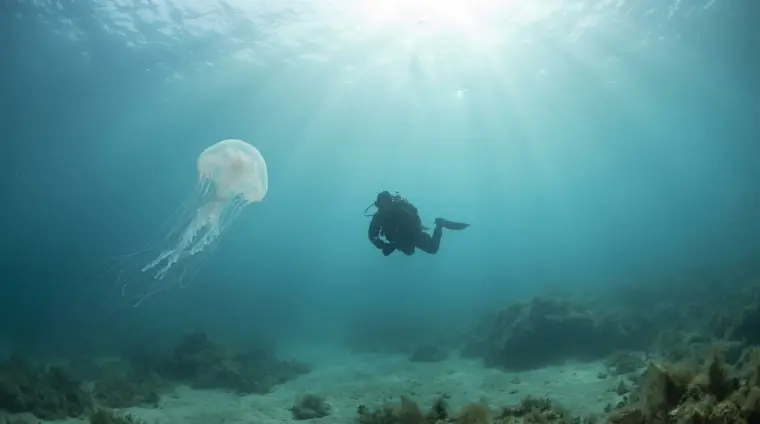
The short version: nothing changes at real dive sites. Scuba diving in Jeju runs from boats at designated points under instructor supervision, inside a system of licensed marine-leisure operators, a different world, legally and practically, from jumping off a pier. The new law targets unsupervised swimming in working harbors; it does not touch guided diving.
What does change: if you planned to snorkel inside a fishing port, or slip in for a freedive session from harbor steps, that becomes a finable offense from April 2027. Beach swimming zones and licensed water-sports operations continue under their own rules. And if your Jeju bucket list said "jump at Panpo Port," consider swapping it for a discover dive you will go deeper, see far more, and have a professional watching you the whole time.
Where to dive instead, Seogwipo's protected islands
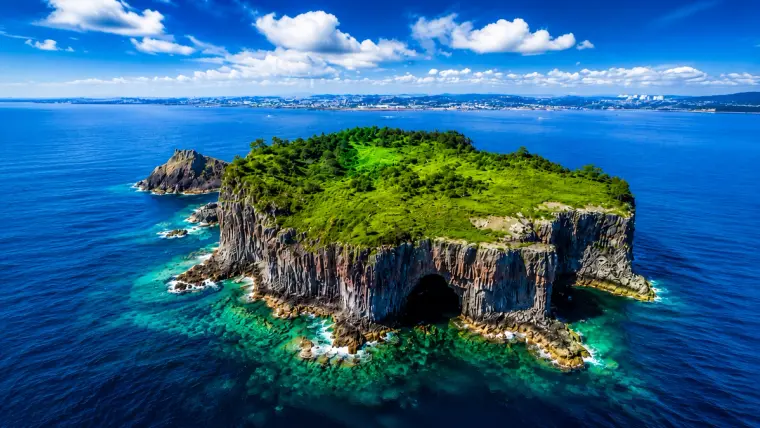
Jeju's best diving was never in the harbors anyway. It is five minutes by boat from Seogwipo Port, around Beomseom and Munseom, uninhabited volcanic islands whose waters were designated Natural Monument No. 421 in 2000, with their soft-coral colonies separately protected as Natural Monument No. 442 in 2004. The walls drop in columns of volcanic basalt dressed in soft corals, and sunlight reaches about 40 meters down, which is why the coral gardens run so deep.
| Point | Depth | What it is | Level |
|---|---|---|---|
| Train Rock (Beomseom) | 14–32m | Ridge of coral-covered rock mounds, Beomseom's headline dive | Fun dive |
| The Nostril (Beomseom) | ~14m | Columnar-basalt wall ending at twin sea caves | Fun dive |
| The Wall (Beomseom) | 10–25m | Sheer face blanketed in soft corals and damselfish | Discover–Fun |
| Saekki Island (Beomseom) | ~14m | Flat-rock entry and calm water, ideal first dive | Discover–Fun |
| Munseom | 8–42m | Soft-coral slopes with rich fish life on the deeper lines | Discover–Fun |
As for right now: July sits inside Jeju's rainy season, which typically runs from mid-June to late July, so boats go out on the days conditions allow, decided each morning. The broader season is generous, though. Diving runs roughly June through November with water temperatures of 18–26°C, summer brings the damselfish clouds Jeju is known for, and visibility peaks in the September–November window. If you are here this month, you are diving in the warm half of the year; if you are planning ahead, autumn is the postcard season.
How to book a legal dive in Jeju
- Complete beginners: book a discover dive. An instructor guides you from start to finish, no certification required, you don't even need to know how to swim
- Certified divers: book fun dives to Beomseom's named points Train Rock, the Nostril, the Wall
- Torn between a one-off experience and a course? Here's the honest comparison
Practical notes for summer: July and August are peak season, so reserve a few days ahead; departures typically leave in the morning from Seogwipo; the center provides all equipment, so a swimsuit and towel are enough. And listen to the briefing, the same currents that make harbor swimming dangerous are exactly what dive professionals read and plan around every single day.
FAQ
Is scuba diving banned in Jeju?
No. The ban that takes effect in April 2027 covers swimming, jumping, and snorkeling at fishing ports and harbors. Scuba diving from licensed boats at designated sites like Beomseom and Munseom is not affected and continues as normal.
When does Korea's harbor swimming ban start?
The revised Fishing Villages and Fishery Harbors Act was passed in March 2026 and takes effect in April 2027. From then, swimming, diving, and snorkeling at fishing ports carry fines of up to 500,000 won.
Can I still snorkel in Jeju after the ban?
Yes, at beaches and with licensed operators. What ends is snorkeling and swimming inside fishing ports and harbors, including the viral spots Panpo Port and Wolryeong Port in western Jeju.
Do I need to know how to swim to try scuba diving in Jeju?
No. Discover dives are designed for complete beginners: an instructor stays with you from entry to exit, and centers in Seogwipo run them daily through the season.
The bottom line
This is the last summer of Jeju's harbor-jumping era, and the safety numbers say it is overdue. But the end of harbor diving is not the end of getting into Jeju's water, it is a nudge toward the version that was always better: a boat, a guide, and Natural-Monument coral walls fading down past 40 meters. If you are in Seogwipo this summer, skip the pier and book the real thing. The sea the harbor jumpers never saw is a five-minute boat ride away.
About the author
Related Posts